Malnutrition is a condition which is never desirable in a young child’s early life development.
This is the same with adults who are faced with the challenge of food insecurity and hunger.
However malnutrition is a reality with many young children who are suffering by choice especially amongst the Karamojong community due to food insecurity and human security caused by cattle rustlers.
As such, agricultural scientists at the National Agricultural Research Organisation (Naro) in collaboration with USAID Feed the future and Ministry of Karamoja affairs have come up with a solution to help solve the challenge of hunger and malnutrition in the region.
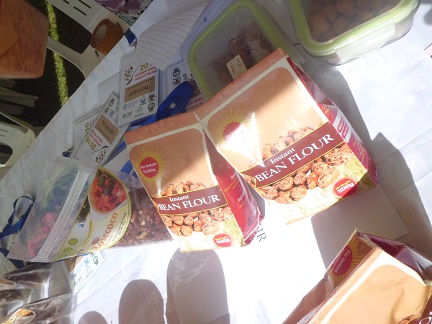
They are promoting growing of bean varieties developed by Naro Scientists rich in Iron and Zinc as well as encouraging the private sector to process instant porridge flour from pre-cooked beans mixed with millet and soy bean flour.
Background
Scientists at the National Crops Resources Research Institute (NaCRRI) in Namulonge in 2016 released bean varieties rich in Iron and Zinc namely NRAOBEAN 1, 2, 3 which are bush beans and NAROBEAN 4C and 5C which are climbing beans suitable for cooler areas such as Kabale and Mountain Elgon region and Kapchorwa.
Dr Stanley Nkalubo, the head of Legume research at NaCRRI in an interview with Daily Monitor noted that the beans which are part of bio fortified foods is an expensive method of families overcoming and preventing malnutrition especially for the resource poor communities.
The varieties contain 20%-25% increase in Iron and Zinc which is a good diet for hunger stricken regions such as Karamoja.
Adoption of the bean varieties in Karamonja
The scientists therefore teamed up with USAID Feed the Future and 2 years ago they began a campaign in the districts of Kotido, Kabong, Nabilatuk and Abim to roll out the bean varieties to farming communities in these districts.
The coordinator of the programme Ms Grace Nayonjo notes that over 9,000 children in Karamoja are reported to be malnourished and this is as a result of food insecurity.
The team therefore decided to devise means of climate smart agriculture where farmers have been sensitized and farmer leaders have been selected to multiply these bean varieties for onward distribution to their fellow farmers for adoption.
They have selected 14 schools in Kotido and 7 in Kabong where children have been sensitized to grow their own beans on school farms and the children have also been given seed to take to their parents for further multiplication to add on their home food diet.
A private food processing company has been contracted to process porridge mix flour called Supper Kawomera which is a mix of pre- cooked bean flour, Amaranth seed flour, soybeans and maize flour which is distributed in schools to add onto their diet.
The future progress is to engage the farmers and processors to take it upon themselves to process the porridge mixture for sale as an income earning initiative.
Future plans
The scientists have decided to engage members of Parliament from the Karamoja region to be part of this initiative.
This is because they have now given the mandate to scientists at Nabuin Zonal Agricultural Research and Development Institute (Nabuin Zardi) in Moroto to multiply seed for onward distribution to the famers.
Experts speak out
Mr Abdullah Kaggwa the programme leader Feed the Future during a breakfast meeting in Kampala on Wednesday noted that, from the overall budget, Feed the Future decided to take this programme to Karamoja because the place is food insecure and security insecure.
Since most of the communities in these districts value cattle keeping, the scientists contend it is time to change their mind set to venture into crop farming because the land is fertile.
Naro Deputy Director General in charge of Agriculture and Technology Promotions Dr Sadik Kassim noted that Karamoja was one of the most brilliant and talented people.
“Scientifically the people are unique and Naro needs to tap that knowledge by changing the society in the region besides the land is good for mechanisations to grow crops such as beans rich in Iron and Zinc,” he noted.
To him the people of Karamoja have lamented enough and they must be enlightened through their legislators, cultural and religious leaders to come out of poverty.
The Chairperson Committee of Science and Technology and Innovations, Remigio Achia noted that Karamoja has the green belt area of Napak, Nakapiripirit and Abim which must be brought on board.
For this to happen, the women must be sensitized because they have interest in crop farming.
He noted that in Namalu and Napak, there are one or two large scale farmers who are growing upland rice and wheat which is being supplied with the community. Since the Karamojong are agro pastoralists, he advised seed distribution to be done during the rainy season.
The Minister Karamoja affairs Dr Maria Gorretti Kitutu noted that already her ministry is doing a good job with the farming community but it is important to collaborate with Naro Scientists who are experts.
“The partnership with Naro is going to be stronger because the scientists at Nabuin Zardi have now been brought on board to conduct breeding of the Iron and Zinc rich beans,” she notes.
Her Ministry has allocated Shs300million to start the breeding process and Shs 500 Million for Namalu Prisons who are already engaged in growing the beans and other food crops to supply in schools.
Her Ministry and Ministry of agriculture have allocated Sh2 Billion to mobilize women farming groups as well as to plant drought prone trees namely olive trees, date palm and grapes.
Action points
The team agreed to mobilize funds for agriculture mechanization, for various planting materials and tasked Naro scientists to zone the areas for cropping and livestock farming.
They agreed to make Nabuin Zardi a centre of excellence as a regional hub to develop seed both for crops and animals for the region as well as harmonize the various stakeholders helping in the region to avoid duplication of activities.