Scientists at the
Uganda Virus Research Institute (UVRI) conducting research on genetically
modified mosquitoes have revealed that there is progress since they are moving
towards field trial.
This was revealed
during stakeholder engagement about the progress of the research work by scientists
who are currently conducting research to breed genetically modified mosquitoes
as one of the measures to curb malaria
Background
Jude Bigirwemkya
the stakeholder engagement manager of the target malaria project explaining the
burden of malaria in the country, noted that malaria control is still a
challenge due to its high transmission rate, inadequate health care resources,
weak health system and increasing resistance of the parasite to drugs as well
as resistance of the mosquitoes to insecticides.
He noted that
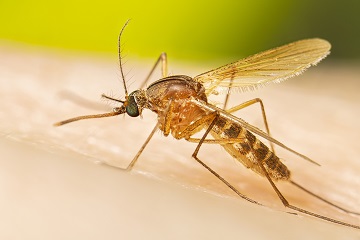
Malaria is caused by a parasite called plasmodium which is spread through bites
of infected mosquitoes.
In Africa the mosquito species include Anopheles gambiae which is a complex of mosquito species primarily found is Sub Sahara Africa that is a major vector of malaria particularly the deadly Plasmodium falciparum parasite
Others are Anopheles Coluzzii, Anoplese Arabiasis and Anopheles fenestus which is believed to be already in Kenya.
There are about
3,500 mosquito species in the world and majority do not transmit malaria and Uganda
has between 150-200 species.
The research aim is
to reduce the population of malaria causing mosquitoes using a technology
called gene drive where male mosquitoes will be in the wild more than females.
Statistical data
Giving the
statistical data from the 2022 malaria report as per the World Health
Organisation, he notes that out of the global 2.65 million malaria infections worldwide
annually, 94% are from Africa.
In Uganda Malaria is still a public health burden accounting for 1.26 million infections and about 15,945 deaths yearly
Four counties in Africa are considered to be with high malaria infection rates with Nigeria leading with 26.8%, Democratic Republic of Congo accounting for 12.3%, Uganda is in third position with 5.1% and Mozambique 4.2%
The Africa region
as whole is off track for both malaria morbidity and mortality where it was
expected by 2025, the malaria burden should be reduced by 52%.
The number of
global cases are significantly higher than the 2019 cases with an increase of
5million cases.
This increase were
observed in countries namely Pakistan, Ethiopia, Nigeria, Uganda and Papua New
Guinea.
In Uganda by the
year 2022, out of the 47,249,584 population, 12,651,126 malaria cases were
registered with 17,556 deaths.
Efforts to curb malaria
Bigirwemkya
explained that already there are several measures being taken which include,
use of treated mosquito nets, indoor residual spraying and vaccine for children
from the age of 8 years
However the
scientist believe these initiatives are not enough therefore the need for
breeding GM mosquitoes which is targeting the three species that target malaria
Various types of research are carried out to contribute to eliminating
malaria by 2030, as advocated by WHO in its global technical strategy document
for the fight against malaria 2016-2030 and Target Malaria is part of this
effort.
Genetic modification process
The genetic
modification is being done by three countries namely Burkina Faso, Ghana and
Uganda.
Already Burkina
Faso has bred mosquitoes targeting sterile male mosquitoes and male bias where
more male mosquitoes are to be bred and released to the population in a bid to
reduce the rate of infection since malaria is caused by female mosquitoes.
The scientists in
Uganda are expected to import and test the male bias mosquitoes in the
environment soon though the target is to breed mosquitoes with gene drive
traits for effective results.
These is because
these species will be able to pass their traits from one generation to another
meaning if they mate, the female will not be able to conceive and to produce
eggs.
Community sensitization
The field
entomology officer Krystal Birungi explained that already her team has been
sensitizing communities mainly on Islands in Lake Victoria mainly in Mukono
district as well as Kalangala where the mosquito species are being collected to
study their behaviour.
It is her
contention that since the malaria burden is so high on these Islands, the
people are demanding for the release of the GM mosquitoes but this can only be
possible if the research work is complete and with existing biosafety law in
place.
Filed trial initiative
According to
Bigirwenkya, the research team has been studying the behaviour of the
mosquitoes in lab including feeding behaviour and how this can be carried on
while in the wild. Others are whether they can be able to fly easily, mating behaviour
and how many eggs can they lay, egg yield and hatchery rate
The research has
shown that the modification has enabled more males being produced more than females
and the next step is to see if this can work in the field.
For field studies
to commence the has to apply to the required Authorities including Uganda
National Council of Science and Technology (UNCST) and the National Environment
Management Authority (Nema) .
They are in the
process of acquiring the authorization certificates to commence field trials.
The team
anticipates release to be in 2029 but this requires a law on biosafety to be in
place.