Beekeeping
also referred to as apiculture in Uganda has evolved from ancient, destructive
wild honey hunting into a structured commercial sector heavily reliant on
traditional practices alongside modern innovations.
Commercial
apiary farming in Uganda is a fast-growing, highly profitable agribusiness that
requires minimal land and low initial labor compared to other traditional
farming including livestock keeping and growing crops.
A
number of Apiary farmers have come on board to embrace bee keeping as income
earning initiative and a good number belong to organised farming groups.
One
such a group is the Batwa community living in Western Uganda who are known to be
hunters in the forest with no land to practice farming.
Background
Experts
explain that ancient roots
of bee keeping is known to be practiced by generations of indigenous communities who
practiced wild honey hunting, locating colonies in hollow trees or rock
crevices and using fire or smoke to harvest.
Over
time, communities transitioned to hanging handcrafted cylindrical or basket
hives woven from bamboo, reeds and sticks hanged in forest trees.
Traditional
methods remain widespread with estimates showing that a large majority of
smallholder rural farmers still use traditional log or basket hives because
they are inexpensive and easy to manage locally.
It
is believed that in 20th and 21st century modern
equipment were introduced by development organisations for farmers to adopt.
They include langtroth and Kenya Top Bar hives which protect bee colonies and
increase yield.
This
is possible through establishment of sector apex bodies like the
Uganda National Apiculture Development Organisation (TUNADO) in the 2000s and
commercial entities like Malaika Honey who helped in training farmers in value
addition and market standardisation.
Today,
beekeeping is recognized as a vital climate-smart economic activity supporting rural
livelihoods, biodiversity and agricultural pollination across regions like
Northern and Western Uganda.
Bringing the Batwa community on board
Jawash
Vira Arinanye TUNADO project coordinator and Apiary extension worker handling
Western Uganda communities including the Batwa explains to Seeds of Gold how
his team managed to bring the Batwa community on board to embrace commercial
bee keeping.
This
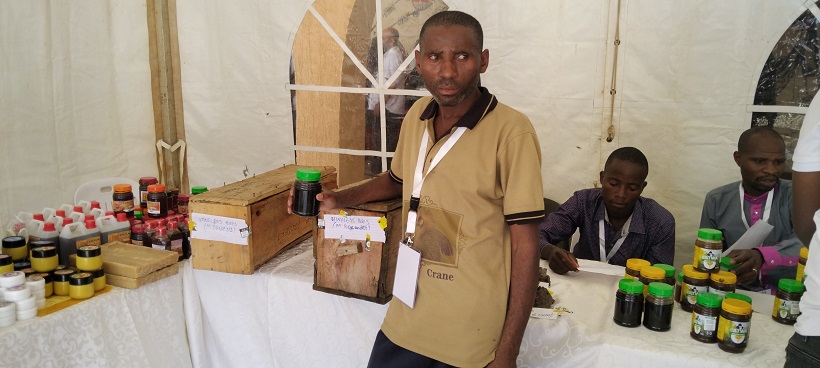
was during the 4th African Apimondia Symposium that took place in
Kampala recently.
He
notes that among the Batwa community, traditionally
indigenous tribe who once lived in Echuya Forest Reserve located in southwestern
Uganda between the Kisoro and Kabale Districts
forests, a quiet transformation is taking place through beekeeping.
The Batwa of southwestern Uganda were evicted from their ancestral
forest land in the early 1990s following the gazetting of Bwindi Impenetrable
and Mgahinga Gorilla National parks. Since then, many have lived landless,
economically vulnerable and socially excluded.
But through the help of TUNADO, a growing number of Batwa
households in villages like Rukeri and Nyakacence in kisoro and Murubindi and
Karengyere in Rubanda are finding a new purpose through the Bees for Batwa project.
It was easy to include the Batwa community in bee keeping due to
their connection to nature as part of their heritage.
The community according to Arinanye lived with bees and used to collect honey from tree trunks and anthills
in the forest, but they have been sensitized to make their own hives.
Arinanye further explained that through
a project called Bees for Batwa with financial support from a UK based
development partners Bees for development, his team began training the Batwa
community in commercial bee keeping in 2019.
This is after the communities were
integrated to live with Bakiga people in Kabale and Kisoro. They were settled
in these communities through purchasing land which is distributed to the Batwa
families in half an acre.
Though majority live in settlements; in
exchange for farmland, they offer labour to the landlords and the level of
exploitation is unimaginable.
Signing of land use agreements and involvement of landlords in the
beekeeping project is providing a levelled ground for all and earning the Batwa
respect as trainers in hive weaving and beekeeping practices.
The Apiary farmers who are identified
by the Resident District Commissioners including the Bakiga communities have
been trained to adopt best practices in order to obtain better yield.
Best
Practices
These practices include, setting up the
Apiary location and site where they are advised to place hives where there is
shade and the hives must be kept away from highways, power stations and
industrial areas.
Ensure the Apiary sites near abundant
flowering plants like coffee, sunflower, fruit trees, or eucalyptus to provide
nectar.
Clear
the land and remove dry leaves to prevent accidental fires and maintain a
clean, constant source of fresh water nearby.
It
is important to choose the right type of hive namely KTB which costs between
Shs120, 000 and Shs200, 000. With each hive yileding15 to 30 kg of honey per
year.
It is ideal for small-scale or organic farming
because you do not need a honey extractor.]
Langstroth Hives costs between
Shs250, 000 and Shs400, 000 yielding a higher volume of 30 to 50 kg per year.
It uses movable frames and is best for commercial operations targeting large
production.
Uganda
has two main harvesting windows: March to June and August to October and
farmers are advised to allow their colonies to build up during the first year.
And full commercial honey harvesting begins in the second year.
They are
trained to use modern equipment such as protective suits, smokers and modern mobile
hives to keep bees safe and improve honey quality.
Market and Revenue
TUNADO has
come up with a unifying market price where raw or processed quality honey sells at farm gate
prices at Shs15, 000 to UGX 20,000 per kg and retail prices Shs20, 000 to Shs30,
000 per kg. Beeswax sells for Shs10, 000
to Shs15, 000 per kg.
Stingless bees
Since the Batwa have knowledge about stingless bees, Arinanye and
his team trained 5 Batwa bee keepers to domesticate and keep stingless bees
alongside honey bees
These farmers have the knowledge to spot the colonies of the
stingless bees in the forest because previously the community members were
hunting them from the ground,
For the last two years they have been harvesting the colonies and
domesticating them.
Stingless bees are medicinal in nature and it is known for
treating wounds and as such it fetches more money. One litre is sold at Shs100,
000.
Farmer experience
Wilber Kaira aged 67 is Batwa bee keeper hailing from Kacherere
Sub County, Murubidi community in Rubanda district.
He told Seeds of Gold that he began practicing bee keeping at the
age of 10 with one bee hive using rudimentary methods which he learnt from his
father who by then was a bee hunter.
He practiced bee keeping purely for consumption but he realised
that keeping bees in hives led to better yield which led him to add 6 more
hives. He later graduated to 10 hives and now he owns167 bee hives.
He belongs to Batwa Bakiga Tukole Hamwe bee keeping Association
comprising of 39 members.
Last
year he harvest 210 kg of honey some of which he sold to purchase Potato seed
which he also grows on his half an acre land.
The
available market for honey in his community is to supply it to local shop
owners where they sell a Kg at Shs10, 000. However they association group
members have begun bulking their honey which is sold to Processors who purchase
in lump sum.
He
acknowledged that last year he was able to earn Shs1.5miliion out of the
portion he sold from the total harvest.
Kairu
is a family man with 6 children with the last three going to school curtsey of
developmental partners who support the Batwa community with children’s
education
He
says the Batwa have been ignored by the government because there is no clear
settlement scheme for them yet the community would wish to engage in practice
agriculture for better livelihood.
Challenges
Despite
the progress in bee keeping, challenges remain. The Batwa community own no land
and this comes with the challenge of having limited access to hive weaving
materials
It
is believed the the forests in the vicinity have abundance of bamboo, reeds and
sticks, however there is restricted access
by the forest authorities since it is forbidden to be found anywhere close to
the forest most especially in Kisoro district.
In
Rubanda, the Batwa community has been fully integrated to the neighboring
community, they are more accepted and can site their beehives in the forest.
Oher
challenges are high cost of protective gear, hive tools and harvesting
equipment which hold back production.
Just
like all smallholder farmers, Batwa beekeepers are not immune to climate
stressors that affect flowering cycles.
Yet,
the determination is unwavering. And this is seen form women like Jane
Nyirangano, a leader in a small Batwa beekeeping group in Nyakacence, who is
training others, advocating for recognition and dreaming of expanding into
value-addition honey products for processing wine.
The
Batwa beekeepers believe in the potential in beekeeping with continued
investment in training, mind set change, skill development and access to
markets
They
contend honey can become more than a community product because it can be a
symbol of inclusion, cultural resilience and environmental harmony.
Visitors
trekking through Mgahinga and Bwindi are already enjoying a taste of honey from
the heart of the Batwa Highlands. Kairu contends soon the community will have
specialty honey with a limited edition, branded, not only sweet in flavor, but
in the story it tells.